


Page 41 - Journal of Special Operations Medicine - Summer 2014
P. 41
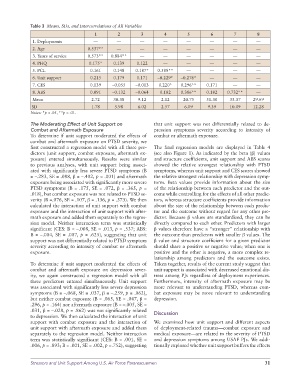
Table 3  Means, SDs, and Intercorrelations of All Variables
                                        1         2        3         4        5         6         7        8
              1. Deployments            —        —         —        —         —         —        —         —
              2. Age                 0.537**     —         —        —         —         —        —         —
              3. Years of service    0.573**   0.884**     —        —         —         —        —         —
              4. PHQ                  0.175*    0.139    0.122      —         —         —        —         —
              5. PCL                  0.161     0.148    0.187*   0.589**     —         —        —         —
              6. Unit support         0.215     0.179    0.171    –0.229*   –0.276*     —        —         —
              7. CES                  0.139    –0.055    –0.013    0.220*   0.296**   0.171      —         —
              8. ABS                  0.091    –0.132    –0.064    0.182    0.386**   0.182    0.732**     —
              Mean                     2.72     30.38     9.12      2.12     20.75    51.30     33.37    29.69
              SD                       1.78     5.98      6.02      2.57     6.09      9.39     10.09    12.28
              Notes: *p < .05, **p < .01.

              The Moderating Effect of Unit Support on           that unit support was not differentially related to de-
              Combat and Aftermath Exposure                      pression  symptoms  severity  according  to  intensity  of
              To determine if unit support moderated the effects of   combat or aftermath exposure.
              combat and aftermath exposure on PTSD severity, we
              first constructed a regression model with all three pre-  The final regression models are displayed in Table 4
              dictors (unit support, combat exposure, aftermath ex-  (see also Figure 1). As indicated by the beta (β) values
              posure) entered simultaneously. Results were similar   and structure coefficients, unit support and ABS scores
              to previous analyses, with unit support being associ-  showed the relative strongest relationship with PTSD
              ated with significantly less severe PTSD symptoms (B   symptoms, whereas unit support and CES scores showed
              = –.283, SE = .088, β = –.402, p < .001) and aftermath   the relative strongest relationship with depression symp-
              exposure being associated with significantly more severe   toms. Beta values provide information about the size
              PTSD symptoms (B = .175, SE = .072, β = .365, p =   of the relationship between each predictor and the out-
              .018), but combat exposure was not related to PTSD se-  come while controlling for the effects of all other predic-
              verity (B =.076, SE = .107, β = .136, p = .373). We then   tors, whereas structure coefficients provide information
              calculated the interaction of unit support with combat   about the size of the relationship between each predic-
              exposure and the interaction of unit support with after-  tor and the outcome without regard for any other pre-
              math exposure and added them separately to the regres-  dictor. Because β values are standardized, they can be
              sion  model.  Neither  interaction  term  was  statistically   directly compared to each other. Predictors with larger
              significant (CES: B = –.008, SE = .013, p = .537; ABS:   β values therefore have a “stronger” relationship with
              B = –.004, SE = .007, p = .625), suggesting that unit   the outcome than predictors with smaller β values. The
              support was not differentially related to PTSD symptom   β value and structure coefficient for a given predictor
              severity according to intensity of combat or aftermath   should share a positive or negative value; when one is
              exposure.                                          positive and the other is negative, a more complex re-
                                                                 lationship among predictors and the outcome exists.
              To determine if unit support moderated the effects of   Taken together, results of the current study suggest that
              combat and aftermath exposure on depression sever-  unit support is associated with decreased emotional dis-
              ity, we again constructed a regression model with all   tress among PJs regardless of deployment experiences.
              three predictors entered simultaneously. Unit support     Furthermore, intensity of aftermath exposure may be
              was  associated with significantly less severe depression   more relevant to understanding PTSD, whereas com-
              symptoms (B = –.068, SE = .037, β = –.259, p = .062),   bat exposure may be more relevant to understanding
              but neither combat exposure (B = .065, SE = .047, β =   depression.
              .296, p = .164) nor aftermath exposure (B = –.005, SE =
              .031, β = –.028, p = .862) was not significantly related
              to depression. We then calculated the interaction of unit   Discussion
              support with combat exposure and the interaction of   We examined how unit support and different aspects
              unit support with aftermath exposure and added them   of deployment-related  trauma—combat  exposure  and
              separately to the regression model. Neither interaction   medical exposure—are related to the severity of PTSD
              term was statistically significant (CES: B = .001, SE =   and depression symptoms among USAF PJs. We addi-
              .006, p = .893; B = .001, SE = .002, p =.752),  suggesting   tionally explored whether unit support buffers the  effects


              Stressors and Unit Support Among U.S. Air Force Pararescuemen                                   31

