


Page 47 - 2026 SMOG
P. 47
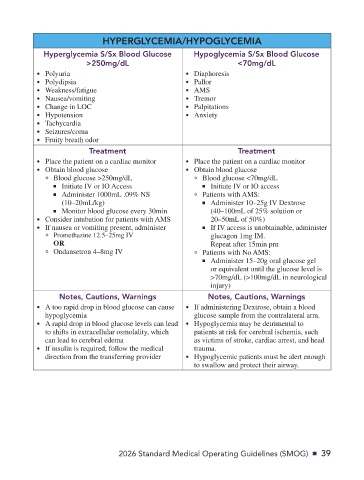
HYPERGLYCEMIA/HYPOGLYCEMIA
           Hyperglycemia S/Sx Blood Glucose   Hypoglycemia S/Sx Blood Glucose
                    >250mg/dL                        <70mg/dL
         •  Polyuria                     •  Diaphoresis
         •  Polydipsia                   •  Pallor
         •  Weakness/fatigue             •  AMS
         •  Nausea/vomiting              •  Tremor
         •  Change in LOC                •  Palpitations
         •  Hypotension                  •  Anxiety
         •  Tachycardia
         •  Seizures/coma
         •  Fruity breath odor
                    Treatment                        Treatment
         •  Place the patient on a cardiac monitor  •  Place the patient on a cardiac monitor
         •  Obtain blood glucose         •  Obtain blood glucose
              ˚  Blood glucose >250mg/dL      ˚  Blood glucose <70mg/dL
             ■   Initiate IV or IO Access    ■   Initiate IV or IO access
             ■   Administer 1000mL .09% NS      ˚  Patients with AMS:
              (10–20mL/kg)                   ■   Administer 10–25g IV Dextrose
             ■   Monitor blood glucose every 30min  (40–100mL of 25% solution or
         •  Consider intubation for patients with AMS  20–50mL of 50%)
         •  If nausea or vomiting present, administer  ■   If IV access is unobtainable, administer
              ˚  Promethazine 12.5–25mg IV     glucagon 1mg IM.
             OR
                                               Repeat after 15min prn
              ˚  Ondansetron 4–8mg IV         ˚  Patients with No AMS:
                                             ■   Administer 15–20g oral glucose gel
                                               or equivalent until the glucose level is
                                               >70mg/dL (>100mg/dL in neurological
                                               injury)
              Notes, Cautions, Warnings       Notes, Cautions, Warnings
         •  A too rapid drop in blood glucose can cause   •  If administering Dextrose, obtain a blood
           hypoglycemia                    glucose sample from the contralateral arm.
         •  A rapid drop in blood glucose levels can lead  •  Hypoglycemia may be detrimental to
           to shifts in extracellular osmolality, which   patients at risk for cerebral ischemia, such
           can lead to cerebral edema      as victims of stroke, cardiac arrest, and head
         •  If insulin is required, follow the medical   trauma.
           direction from the transferring provider  •  Hypoglycemic patients must be alert enough
                                           to swallow and protect their airway.


                           2026 Standard Medical Operating Guidelines (SMOG)  •   39

