


Page 26 - 2026 SMOG
P. 26
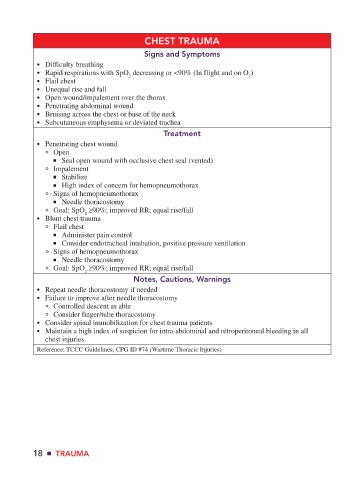
CHEST TRAUMA
                                Signs and Symptoms
         •  Difficulty breathing
         •  Rapid respirations with SpO  decreasing or <90% (In flight and on O )
                                                       2
                             2
         •  Flail chest
         •  Unequal rise and fall
         •  Open wound/impalement over the thorax
         •  Penetrating abdominal wound
         •  Bruising across the chest or base of the neck
         •  Subcutaneous emphysema or deviated trachea
                                     Treatment
         •  Penetrating chest wound
              ˚  Open
             ■   Seal open wound with occlusive chest seal (vented)
              ˚  Impalement
             ■   Stabilize
             ■   High index of concern for hemopneumothorax
              ˚  Signs of hemopneumothorax
             ■   Needle thoracostomy
              ˚  Goal: SpO  ≥90%; improved RR; equal rise/fall
                   2
         •  Blunt chest trauma
              ˚  Flail chest
             ■   Administer pain control
             ■   Consider endotracheal intubation, positive pressure ventilation
              ˚  Signs of hemopneumothorax
             ■   Needle thoracostomy
              ˚  Goal: SpO  ≥90%; improved RR; equal rise/fall
                   2
                              Notes, Cautions, Warnings
         •  Repeat needle thoracostomy if needed
         •  Failure to improve after needle thoracostomy
              ˚  Controlled descent as able
              ˚
             Consider finger/tube thoracostomy
         •  Consider spinal immobilization for chest trauma patients
         •  Maintain a high index of suspicion for intra-abdominal and retroperitoneal bleeding in all
           chest injuries
         Reference: TCCC Guidelines; CPG ID #74 (Wartime Thoracic Injuries)


        18  •   TRAUMA

