


Page 39 - JSOM Winter 2023
P. 39
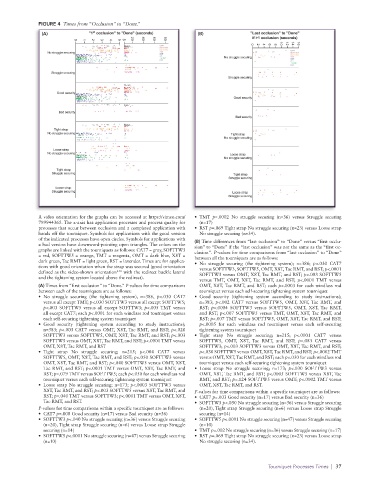
FIGURE 4  Times from “Occlusion” to “Done.”
                               st
               (A)            "1 occlusion" to "Done" (seconds)   (B)              "Last occlusion" to "Done"
                                                                                   if >1 occlusion (seconds)
                                         5
                               2
                                  3
                                     4
                                                       80
                         0
                            1
                                            20
                                               40
                                                   60
                                        5
                                                     CAT7                          0  2  4  6  8  10  12  14  16
                                                     SOFTTW3
                                                     SOFTTW5
                No struggle securing                 TMT                                        CAT7
                                                                                                SOFTTW3
                                                     OMT
                                                     X8T                  No struggle securing  SOFTTW5
                                                                                                TMT
                                                     Tac RMT                                    OMT
                                                     RST                                        X8T
                                                                                                Tac RMT
                                                                                                RST
                  Struggle securing
                                                                            Struggle securing
                    Good security
                                                                             Good security
                    Bad security
                                                                              Bad security
                   Tight strap
                No struggle securing                                        Tight strap
                                                                          No struggle securing
                  Loose strap
                No struggle securing                                        Loose strap
                                                                          No struggle securing
                   Tight strap
                  Struggle securing                                          Tight strap
                                                                            Struggle securing
                   Loose strap
                  Struggle securing                                          Loose strap
                                                                            Struggle securing
              A video orientation for the graphs can be accessed at https://vimeo.com/   •  TMT  p=.0002  No  struggle  securing  (n=36)  versus  Struggle  securing
              799944365. The x-axis has application processes and process quality for   (n=17)
              processes that occur between occlusion and a completed application with   •  RST p=.069 Tight strap No struggle securing (n=23) versus Loose strap
              hands off the tourniquet. Symbols for applications with the good version   No struggle securing (n=34).
              of the indicated processes have open circles. Symbols for applications with   (B) Time differences from “last occlusion” to “Done” versus “first occlu-
              a bad version have downward-pointing open triangles. The colors on the   sion” to “Done” if the “last occlusion” was not the same as the “first oc-
              graphs are linked with the tourniquets as follows: CAT7 = gray, SOFTTW3   clusion”. P-values for time comparisons from “last occlusion” to “Done”
              = red, SOFTTW5 = orange, TMT = magenta, OMT = dark blue, X8T =   between all the tourniquets are as follows:
              dark green, Tac RMT = light green, RST = lavender. Times are for applica-  •  No struggle securing (the tightening system); n=386; p<.030 CAT7
              tions with good orientation when the strap was secured (good orientation   versus SOFTTW3, SOFTTW5, OMT, X8T, Tac RMT, and RST; p<.0001
              defined as the video-shown orientation 2-10  with the redirect buckle lateral   SOFTTW3 versus OMT, X8T, Tac RMT, and RST; p<.003 SOFTTW5
              and the tightening system located above the redirect).
                                                                  versus  TMT, OMT, X8T,  Tac RMT, and RST; p<.0001 TMT  versus
              (A) Times from “first occlusion” to “Done.” P-values for time comparisons   OMT, X8T, Tac RMT, and RST; each p<.0003 for each windlass rod
              between each of the tourniquets are as follows:     tourniquet versus each self-securing tightening system tourniquet
              •  No struggle securing (the tightening system), n=386, p<.030 CAT7   •  Good security (tightening system according to study instructions);
               versus all except TMT; p<.030 SOFTTW3 versus all except SOFTTW5;   n=383; p<.002 CAT7 versus SOFTTW5, OMT, X8T,  Tac RMT, and
               p<.003 SOFTTW5 versus all except SOFTTW3; p<.005 TMT  versus   RST; p<.0004 SOFTTW3 versus SOFTTW5, OMT, X8T,  Tac RMT,
               all except CAT7; each p<.0001 for each windlass rod tourniquet versus   and RST; p<.007 SOFTTW5 versus TMT, OMT, X8T, Tac RMT, and
               each self-securing tightening system tourniquet    RST; p<.007 TMT versus SOFTTW5, OMT, X8T, Tac RMT, and RST;
              •  Good security (tightening system according to study instructions);   p<.0005  for  each  windlass  rod  tourniquet  versus  each  self-securing
               n=383; p<.003 CAT7 versus OMT, X8T, Tac RMT, and RST; p<.020   tightening system tourniquet
               SOFTTW3 versus SOFTTW5, OMT, X8T, Tac RMT, and RST; p<.003   •  Tight strap No struggle securing; n=215; p<.0001 CAT7 versus
               SOFTTW5 versus OMT, X8T, Tac RMT, and RST; p<.0001 TMT versus   SOFTTW5, OMT, X8T,  Tac RMT, and RST; p=.083 CAT7 versus
               OMT, X8T, Tac RMT, and RST                         SOFTTW3; p<.003 SOFTTW3 versus OMT, X8T, Tac RMT, and RST;
              •  Tight strap No struggle securing; n=215; p<.004 CAT7 versus   p<.030 SOFTTW5 versus OMT, X8T, Tac RMT, and RST; p<.0002 TMT
               SOFTTW5, OMT, X8T, Tac RMT, and RST; p<.050 SOFTTW3 versus   versus OMT, X8T, Tac RMT, and RST; each p<.030 for each windlass rod
               OMT, X8T, Tac RMT, and RST; p<.040 SOFTTW5 versus OMT, X8T,   tourniquet versus each self-securing tightening system tourniquet
               Tac RMT, and RST; p<.0001 TMT versus OMT, X8T, Tac RMT, and   •  Loose strap No struggle securing; n=173; p<.030 SOFTTW3 versus
               RST; p=.079 TMT versus SOFTTW5; each p<.050 for each windlass rod   OMT, X8T, Tac RMT, and RST; p<.0005 SOFTTW5 versus X8T, Tac
               tourniquet versus each self-securing tightening system tourniquet  RMT, and RST; p=.124 SOFTTW5 versus OMT; p<.0002 TMT versus
              •  Loose strap No struggle securing; n=173; p<.0003 SOFTTW3 versus   OMT, X8T, Tac RMT, and RST.
               X8T, Tac RMT, and RST; p<.003 SOFTTW5 versus X8T, Tac RMT, and   P-values for time comparisons within a specific tourniquet are as follows:
               RST; p=.040 TMT versus SOFTTW3; p<.0001 TMT versus OMT, X8T,   •  CAT7 p=.003 Good security (n=17) versus Bad security (n=36)
               Tac RMT, and RST.                                 •  SOFTTW3 p<.050 No struggle securing (n=36) versus Struggle securing
              P-values for time comparisons within a specific tourniquet are as follows:  (n=20), Tight strap Struggle securing (n=6) versus Loose strap Struggle
              •  CAT7 p=.008 Good security (n=17) versus Bad security (n=36)  securing (n=14)
              •  SOFTTW3 p<.040 No struggle securing (n=36) versus Struggle securing   •  SOFTTW5 p<.0001 No struggle securing (n=47) versus Struggle securing
               (n=20), Tight strap Struggle securing (n=6) versus Loose strap Struggle   (n=10)
               securing (n=14)                                   •  TMT p=.002 No struggle securing (n=36) versus Struggle securing (n=17)
              •  SOFTTW5 p<.0001 No struggle securing (n=47) versus Struggle securing   •  RST p=.069 Tight strap No struggle securing (n=23) versus Loose strap
               (n=10)                                             No struggle securing (n=34).

                                                                                         Tourniquet Processes Times  |  37

