


Page 83 - JSOM Summer 2018
P. 83
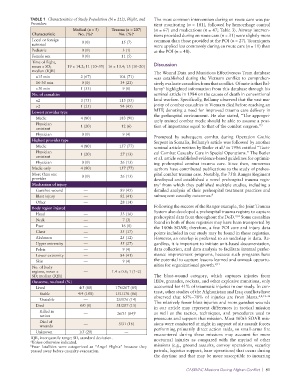
TABLE 1  Characteristics of Study Population (N = 212), Flight, and   The most common intervention during en route care was pa-
              Providers                                          tient monitoring (n = 101), followed by hemorrhage control
                               Medical (n = 5)  Trauma (n = 207)  (n = 67) and medications (n = 47; Table 3). Airway interven-
              Characteristic     No. (%) a        No. (%) a      tions provided during en route care (n = 31) were slightly more
              Local or foreign                                   common than those provided at the POI (n = 27). Tourniquets
              national             0 (0)           15 (7)        were applied less commonly during en route care (n = 11) than
              Pediatric            0 (0)            3 (1)        at the POI (n = 48).
              Female sex           0 (0)           11 (5)
              Time of flight,                                    Discussion
              mean ± SD;     19 ± 14.2; 11 (10–35) 16 ± 13.4; 13 (10–20)
              median (IQR)                                       The Wound Data and Munitions Effectiveness Team database
                ≤15 min           2 (67)          104 (71)       was  established  during the  Vietnam  conflict  to  comprehen-
                16-30 min          0 (0)           34 (23)       sively evaluate casualties from that conflict. Of note is that Bel-
                >30 min           1 (33)            9 (6)        lamy  highlighted information from this database through his
                                                                    5
              No. of casualties                                  seminal article in 1984 on the causes of death in conventional
                ≤2                3 (75)          113 (55)       land warfare. Specifically, Bellamy observed that the vast ma-
                >2                1 (25)           94 (45)       jority of combat casualties in Vietnam died before reaching an
              Lowest provider type                               MTF, denoting a need for improved trauma care delivery in
                                                                 the prehospital environment. He also stated, “The appropri-
                Medic             4 (80)          183 (90)       ately trained combat medic should be able to assume a posi-
                 Physician        1 (20)           12 (6)        tion of importance equal to that of the combat surgeon.” 5
                assistant
                Physician          0 (0)            9 (4)        Prompted by subsequent combat during Operation Gothic
              Highest provider type                              Serpent in Somalia, Bellamy’s article was followed by another
                Medic             4 (80)          157 (77)       seminal article written by Butler et al.  in 1996 entitled “Tacti-
                                                                                             6
                 Physician                                       cal Combat Casualty Care in Special Operations.” The Butler
                assistant         1 (20)           27 (13)       et al. article established evidence-based guidelines for optimiz-
                Physician          0 (0)           26 (13)       ing prehospital combat trauma care. Since then, numerous
              Medic only          4 (80)          157 (77)       authors have contributed publications to the study of prehos-
              More than one        0 (0)           26 (13)       pital combat trauma care. Notably, the 75th Ranger Regiment
              provider                                           developed and established a novel prehospital trauma regis-
              Mechanism of injury                                try  from which they published multiple studies, including a
                                                                   7
                Gunshot wound       —              89 (45)       detailed analysis of their prehospital treatment practices and
                Blast injury        —              82 (41)       subsequent casualty outcomes. 8
                Other               —              28 (14)
              Body region injured                                Following the success of the Ranger example, the Joint Trauma
                                                                 System also developed a prehospital trauma registry to capture
                Head                —              33 (16)       prehospital data from throughout the DoD. 9,10  Some casualties
                Neck                —               7 (3)        found in both of these registries may have been transported by
                Face                —              16 (8)        the 160th SOAR; therefore, a few POI care and injury data
                Chest               —              35 (17)       points included in our study may be found in those registries.
                Abdomen             —              25 (12)       However, an overlap is preferred to an underlap in data. Re-
                Upper extremity     —              55 (27)       gardless, it is important to initiate unit-based documentation,
                Pelvis              —               9 (4)        data collection, and data analysis to facilitate internal perfor-
                Lower extremity     —              84 (41)       mance improvement programs, because such programs have
                Skin                —               9 (4)        the potential to capture lessons learned and unmask opportu-
                                                                                          8,11
              No. of body                                        nities for organizational growth.
              regions, mean ±       —          1.4 ± 0.6; 1 (1–2)
              SD; median (IQR)                                   The blast-wound category, which captures injuries from
              Outcome, no./total (%)                             IEDs, grenades, rockets, and other explosive munitions, only
                Lived             4/5 (80)       176/207 (85)    accounted for 41% of traumatic injuries in our study. In con-
                 Stable          4/4 (100)       151/176 (86)    trast, other studies of the Afghanistan and Iraq conflicts have
                                                                 observed that 65%–78% of injuries are from blasts.
                                                                                                            4,8,12–14
                 Unstable           —            25/176 (14)     The relatively fewer blast injuries and more gunshot wounds
                Died              0/0 (0)        31/207 (15)     in our article may represent differences in tactical mission
                 Killed in          —            26/31 (84) b    as well as the tactics, techniques, and procedures used to
                 action                                          prosecute and support that mission. Most 160th SOAR mis-
                 Died of            —             5/31 (16)      sions were conducted at night in support of air assault forces
                 wounds                                          performing primarily direct action raids, so small-arms fire
                Unknown           1/5 (20)          —            encountered during these missions may account for more
              IQR, interquartile range; SD, standard deviation.  nocturnal injuries as compared with the myriad of other
              a Unless otherwise indicated.
              b Four fatalities were categorized as “Angel Flights” because they   missions (e.g., ground assaults, convoy operations, security
              passed away before casualty evacuation.            patrols, logistics support, base operations) that occur during
                                                                 the daytime and that may be more susceptible to incurring

                                                                              CASEVAC Missions During Afghan Conflict  |  81

