


Page 145 - 2022 Ranger Medic Handbook
P. 145
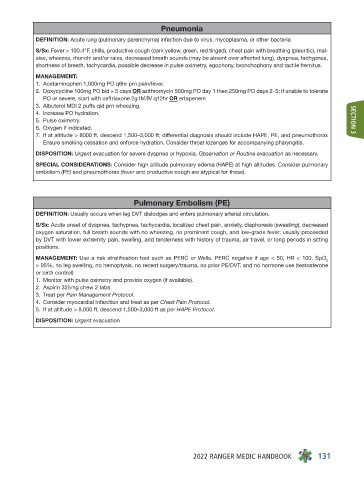
Pneumonia
         DEFINITION: Acute lung (pulmonary parenchyma) infection due to virus, mycoplasma, or other bacteria
         S/Sx: Fever > 100.4°F, chills, productive cough (dark yellow, green, red tinged), chest pain with breathing (pleuritic), mal-
         aise, wheezes, rhonchi and/or rales, decreased breath sounds (may be absent over affected lung), dyspnea, tachypnea,
         shortness of breath, tachycardia, possible decrease in pulse oximetry, egophony, bronchophony and tactile fremitus.
         MANAGEMENT:
         1.  Acetaminophen 1,000mg PO q6hr prn pain/fever.
         2.  Doxycycline 100mg PO bid × 5 days OR azithromycin 500mg PO day 1 then 250mg PO days 2–5; if unable to tolerate
          PO or severe, start with ceftriaxone 2g IM/IV q12hr OR ertapenem
         3.  Albuterol MDI 2 puffs qid prn wheezing.
         4.  Increase PO hydration.
         5.  Pulse oximetry.                                                 SECTION 3
         6.  Oxygen if indicated.
         7.  If at altitude > 8000 ft, descend 1,500–3,000 ft; differential diagnosis should include HAPE, PE, and pneumothorax
          Ensure smoking cessation and enforce hydration. Consider throat lozenges for accompanying pharyngitis.
         DISPOSITION: Urgent evacuation for severe dyspnea or hypoxia. Observation or Routine evacuation as necessary.
         SPECIAL CONSIDERATIONS: Consider high altitude pulmonary edema (HAPE) at high altitudes. Consider pulmonary
         embolism (PE) and pneumothorax (fever and productive cough are atypical for these).


                              Pulmonary Embolism (PE)
         DEFINITION: Usually occurs when leg DVT dislodges and enters pulmonary arterial circulation.
         S/Sx: Acute onset of dyspnea, tachypnea, tachycardia, localized chest pain, anxiety, diaphoresis (sweating), decreased
         oxygen saturation, full breath sounds with no wheezing, no prominent cough, and low-grade fever; usually proceeded
         by DVT with lower extremity pain, swelling, and tenderness with history of trauma, air travel, or long periods in sitting
         positions.
         MANAGEMENT: Use a risk stratification tool such as PERC or Wells. PERC negative if age < 50, HR < 100, SpO 2
         > 95%, no leg swelling, no hemoptysis, no recent surgery/trauma, no prior PE/DVT, and no hormone use (testosterone
         or birth control)
         1.  Monitor with pulse oximetry and provide oxygen (if available).
         2.  Aspirin 325mg chew 2 tabs.
         3.  Treat per Pain Management Protocol.
         4.  Consider myocardial Infarction and treat as per Chest Pain Protocol.
         5.  If at altitude > 8,000 ft, descend 1,500–3,000 ft as per HAPE Protocol.
         DISPOSITION: Urgent evacuation


                                           2022 RANGER MEDIC HANDBOOK  131

