


Page 16 - Journal of Special Operations Medicine - Summer 2016
P. 16
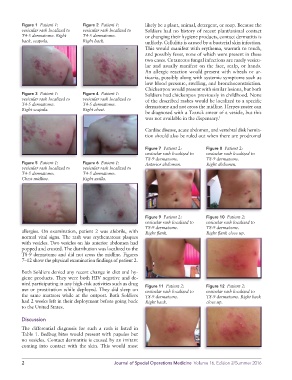
Figure 1  Patient 1:     Figure 2  Patient 1:      likely be a plant, animal, detergent, or soap. Because the
          vesicular rash localized to   vesicular rash localized to   Soldiers had no history of recent plant/animal contact
          T4-5 dermatome. Right    T4-5 dermatome.           or changing their hygiene products, contact dermatitis is
          back, scapula.           Right back.               unlikely. Cellulitis is caused by a bacterial skin infection.
                                                             This would manifest with erythema, warmth to touch,
                                                             and possibly fever, none of which were present in these
                                                             two cases. Cutaneous fungal infections are rarely vesicu-
                                                             lar and usually manifest on the face, scalp, or hands.
                                                             An allergic reaction would present with wheals or ur-
                                                             ticaria, possibly along with systemic symptoms such as
                                                             low blood pressure, swelling, and bronchoconstriction.
                                                             Chickenpox would present with similar lesions, but both
          Figure 3  Patient 1:     Figure 4  Patient 1:      Soldiers had chickenpox previously in childhood. None
          vesicular rash localized to   vesicular rash localized to   of the described rashes would be localized to a specific
          T4-5 dermatome.          T4-5 dermatome.           dermatome and not cross the midline. Herpes zoster can
          Right scapula.           Right chest.
                                                             be diagnosed with a Tzanck smear of a vesicle, but this
                                                             was not available in the dispensary. 1

                                                             Cardiac disease, acute abdomen, and vertebral disk hernia-
                                                             tion should also be ruled out when there are prodromal


                                                             Figure 7  Patient 2:     Figure 8  Patient 2:
                                                             vesicular rash localized to   vesicular rash localized to
                                                             T8-9 dermatome.          T8-9 dermatome.
          Figure 5  Patient 1:     Figure 6  Patient 1:      Anterior abdomen.        Right abdomen.
          vesicular rash localized to   vesicular rash localized to
          T4-5 dermatome.          T4-5 dermatome.
          Chest midline.           Right axilla.


                                                             Figure 9  Patient 2:     Figure 10  Patient 2:
                                                             vesicular rash localized to   vesicular rash localized to
                                                             T8-9 dermatome.          T8-9 dermatome.
          allergies. On examination, patient 2 was afebrile, with   Right flank.      Right flank close up.
          normal vital signs. The rash was erythematous plaques
          with vesicles. Two vesicles on his anterior abdomen had
          popped and crusted. The distribution was localized to the
          T8-9 dermatome and did not cross the midline. Figures
          7–12 show the physical examination findings of patient 2.

          Both Soldiers denied any recent change in diet and hy-
          giene products. They were both HIV negative and de-
          nied participating in any high-risk activities such as drug   Figure 11  Patient 2:   Figure 12  Patient 2:
          use or prostitution while deployed. They did sleep on   vesicular rash localized to   vesicular rash localized to
          the same mattress while at the outpost. Both Soldiers   T8-9 dermatome.     T8-9 dermatome. Right back
          had 2 weeks left in their deployment before going back   Right back.        close up.
          to the United States.


          Discussion
          The differential diagnosis for such a rash is listed in
          Table 1. Bedbug bites would present with papules but
          no vesicles. Contact dermatitis is caused by an irritant
            coming into contact with the skin. This would most


          2                                     Journal of Special Operations Medicine  Volume 16, Edition 2/Summer 2016

