


Page 103 - JSOM Summer 2022
P. 103
9
              ventilation allowing a set minimum rate of volume- or pressure-   categories: barotrauma, volutrauma, and atelectotrauma.
              controlled breaths in conjunction with the patient’s efforts, with   These pathologies collectively result in mechanical damage to
              the potential for added intermittent assisted breaths to supple-  the lung and release of inflammatory mediators further exac-
              ment the respiratory requirements of the patient.  erbating lung injury. Barotrauma occurs with high mean air-
                                                                 way pressures during ventilation. PPV at relatively high tidal
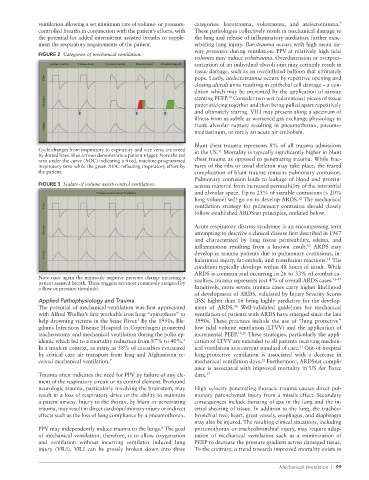
              FIGURE 2  Categories of mechanical ventilation.
                                                                 volumes may induce volutrauma. Overdistension or overpres-
                                                                 surization of an individual alveoli unit may certainly result in
                                                                 tissue damage, such as an overinflated balloon that ultimately
                                                                 pops. Lastly, atelectotrauma occurs by repetitive opening and
                                                                 closing alveoli units resulting in epithelial cell damage – a con-
                                                                 dition which may be prevented by the application of airway
                                                                 stenting PEEP.  Consider two wet (edematous) pieces of tissue
                                                                            10
                                                                 paper sticking together and then being pulled apart repetitively
                                                                 and ultimately tearing. VILI may present along a spectrum of
                                                                 illness from as subtle as worsened gas exchange physiology to
                                                                 frank  alveolar  rupture  resulting  in  pneumothorax,  pneumo-
                                                                 mediastinum, or rarely an acute air embolism.

                                                                 Blunt chest trauma represents 8% of all trauma admissions
              Cycle changes from inspiratory to expiratory and vice versa are noted   in the US.  Mortality is typically significantly higher in blunt
                                                                        11
              by dotted lines. Blue arrows demonstrate a patient trigger. Note the red
              area under the curve (AOC) indicating a fixed, machine- programmed   chest trauma as opposed to penetrating trauma. While frac-
              inspiratory time while the green AOC reflecting inspiratory effort by   tures of the ribs or axial skeleton may take place, the feared
              the patient.                                       complication of blunt trauma remains pulmonary contusion.
                                                                 Pulmonary contusion leads to leakage of blood and protein-
              FIGURE 3  Scalars of volume assist-control ventilation.  aceous material from increased permeability of the interstitial
                                                                 and alveolar space. Up to 25% of sizeable contusions (> 20%
                                                                 lung volume) will go on to develop ARDS.  The mechanical
                                                                                                  12
                                                                 ventilation strategy for pulmonary contusion should closely
                                                                 follow established ARDSnet principles, outlined below.

                                                                 Acute respiratory distress syndrome is an encompassing term
                                                                 attempting to describe a clinical disease first described in 1967
                                                                 and characterized by lung tissue permeability, edema, and
                                                                                                     13
                                                                 inflammation resulting from a known insult.  ARDS may
                                                                 develop in trauma patients due to pulmonary contusions, in-
                                                                                                            14
                                                                 halational injury, fat emboli, and transfusion reactions.  The
                                                                 condition typically develops within 48 hours of insult. While
                                                                 ARDS is common and occurring in 26 to 33% of combat ca-
              Note once again the miniscule negative pressure change initiating a   sualties, trauma represents just 4% of overall ARDS cases. 15–17
              patient assisted breath. These triggers are most commonly assigned by
              a flow or pressure threshold.                      Intuitively, more severe trauma cases carry higher likelihood
                                                                 of development of ARDS, validated by Injury Severity Scores
              Applied Pathophysiology and Trauma                 (ISS) higher than 16 being highly predictive for the develop-
                                                                              18
              The potential of mechanical ventilation was first appreciated   ment of ARDS.  Well-validated guidelines for mechanical
              with Alfred Woillez’s first workable iron lung “spirophore” to   ventilation of patients with ARDS have emerged since the late
              help drowning victims in the Seine River.  By the 1950s, Ble-  1990s. These practices include the use of “lung protective”
                                              5
              gdams Infectious Disease Hospital in Copenhagen pioneered   low tidal volume ventilation (LTVV) and the application of
              tracheostomy and mechanical ventilation during the polio ep-  incremental PEEP. 19,20  These strategies, particularly the appli-
              idemic which led to a mortality reduction from 87% to 40%.    cation of LTVV are extended to all patients receiving mechan-
                                                             6
              In a modern context, as many as 58% of casualties evacuated   ical ventilation as a current standard of care.  Out-of-hospital
                                                                                                   21
              by critical care air transport from Iraq and Afghanistan re-  lung-protective ventilation is associated with a decrease in
              ceived mechanical ventilation. 7                   mechanical ventilation days.  Furthermore, ARDSnet compli-
                                                                                       22
                                                                 ance is associated with improved mortality in US Air Force
              Trauma often indicates the need for PPV by failure of any ele-  data. 23
              ment of the respiratory circuit or its control element. Profound
              neurologic trauma, particularly involving the brainstem, may   High velocity penetrating thoracic trauma causes direct pul-
              result in a loss of respiratory drive or the ability to maintain   monary parenchymal injury from a missile effect. Secondary
              a patent airway. Injury to the thorax, by blunt or penetrating   consequences include bursting of gas in the lung and the in-
              trauma, may result in direct cardiopulmonary injury or indirect   ertial sheering of tissue. In addition to the lung, the tracheo-
              effects such as the loss of lung compliance by a pneumothorax.  bronchial tree, heart, great vessels, esophagus, and diaphragm
                                                                 may also be injured. The resulting clinical situations, including
              PPV may independently induce trauma to the lungs.  The goal   pneumothorax or tracheobronchial injury, may require adap-
                                                      8
              of mechanical ventilation, therefore, is to allow oxygenation   tation of mechanical ventilation such as a minimization of
              and ventilation without incurring ventilator induced lung   PEEP to decrease the pressure gradient across damaged tissue.
              injury (VILI). VILI can be grossly broken down into three   To the contrary, a trend towards improved mortality exists in

                                                                                            Mechanical Ventilation  |  99

