


Page 115 - JSOM Summer 2019
P. 115
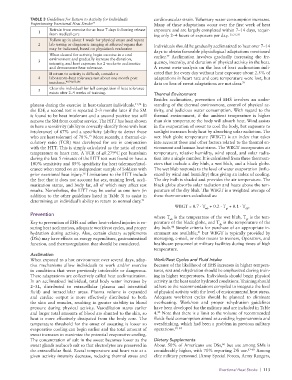
TABLE 3 Guidelines for Return to Activity for Individuals   cardiovascular strain. Voluntary water consumption increases.
              Experiencing Exertional Heat Stroke 27             Many of these adaptations occur over the first week of heat
                     Refrain from exercise for at least 7 days following release   exposure and are largely completed within 7–14 days, requir-
                 1
                     from medical care                           ing only 2–4 hours of exposure per day.  15,77,78
                     Follow up in about 1 week for physical exam and repeat
                 2   lab testing or diagnostic imaging of affected organs that   Individuals should be gradually acclimatized to heat over 7–14
                     may be indicated, based on physician’s evaluation  days to obtain favorable physiological adaptations mentioned
                     When cleared for activity, begin exercise in a cool   earlier.  Acclimation involves gradually increasing the fre-
                                                                      77
                     environment and gradually increase the duration,
                 3                                               quency, intensity, and duration of physical activity in the heat.
                     intensity, and heat exposure for 2 weeks to acclimatize
                     and demonstrate heat tolerance.             A recent meta-analysis on the loss of heat acclimation indi-
                     If return to activity is difficult, consider a   cated that for every day without heat exposure about 2.5% of
                 4   laboratory–heat tolerance test about one month post   adaptations in heart rate and core temperature were lost, but
                     incidence. 49,74,105,106                    data on loss of sweat adaptations are not clear. 79
                     Clear the individual for full competition if heat tolerance
                 5
                     exists after 2–4 weeks of training.         Thermal Environment
                                                                 Besides  acclimation, prevention  of  EHS involves  an  under-
              plateau during the exercise in heat-tolerant individuals. 51,74  In   standing of the thermal environment, control of physical ac-
              the IDF, a second test is repeated 2–3 months later if the SM   tivity, and judicious water consumption. With regard to the
              is found to be heat intolerant and a second positive test will   thermal  environment,  if the  ambient temperature  is higher
              remove the SM from combat service. The HTT has been shown   than skin temperature the body will absorb heat. Wind assists
              to have a sensitivity (ability to correctly identify those with heat   in the evaporation of sweat to cool the body, but exposure to
              intolerance) of 67% and a specificity (ability to detect those   sunlight increases body heat by absorbing solar radiation. The
                                      75
              who are heat tolerant) of 78%.  More recently, a thermal-cir-  wet blub globe temperature (WBGT) is an index that takes
              culatory ratio (TCR) was developed for use in conjunction   into account these and other factors related to the thermal en-
              with the HTT. This is simply calculated as the ratio of rectal   vironment and human heat stress. The WBGT incorporates air
              temperature to heart rate. A TCR of ≤0.279°C per beats/min   temperature, relative humidity, wind speed, and solar radia-
              during the last 5 minutes of the HTT test was found to have a   tion into a single number. It is calculated from three thermom-
              100% sensitivity and 89% specificity for heat tolerance/intol-  eters that include a dry blub, a wet blub, and a black globe.
              erance when tested on an independent sample of Soldiers with   The wet blub responds to the level of water evaporation (influ-
                                   76
              prior exertional heat injury.  Limitations to the HTT include   enced by wind and humidity) thus giving an index of cooling.
              the fact that it does not account for sex, training level, accli-  The dry bulb is shaded and provides the air temperature. The
              matization status, and body fat, all of which may affect test   black globe absorbs solar radiation and heats above the tem-
              results. Nonetheless, the HTT may be useful as one item (in   perature of the dry blub. The WBGT is a weighted average of
              addition to the other guidelines listed in Table 3) to assist in   these thermometers calculated as:
              determining an individual’s ability to return to normal duty. 73
                                                                         WBGT = 0.7 · T  + 0.2 · T  + 0.1 · T ,
                                                                                      wb      gt      db
              Prevention
                                                                 where T  is the temperature of the wet blub, T  is the tem-
                                                                                                       gt
                                                                       wb
              Key to prevention of EHS and other heat-related injuries is en-  perature of the black globe, and T  is the temperature of the
                                                                                            db
              suring heat acclimation, adequate work/rest cycles, and proper   dry bulb.  Simple criteria for purchase of an appropriate in-
                                                                        80
              hydration  during  activity.  Also,  certain  dietary  supplements   strument are available,  but WBGT is typically provided by
                                                                                   81
              (DSs) may have effects on energy expenditure, gastrointestinal   messaging, e-mail, or other means to trainers, Operators, and
              function, and thermoregulation that should be considered.  healthcare personnel at military facilities during times of high
                                                                 temperature.
              Acclimation
              When exposed to a hot environment over several days, adap-  Work/Rest Cycles and Fluid Intake
              tive mechanisms allow individuals to work and/or exercise   Because of the likelihood of EHS increases in higher tempera-
              in conditions that were previously intolerable or dangerous.   tures, rest and rehydration should be emphasized during train-
              These adaptations are collectively called heat acclimatization.   ing in higher temperatures. Individuals should begin physical
              In an acclimatized individual, total body water increases by   activity in the heat under hydrated conditions. Training should
              2–3L,  distributed  to  extracellular  (plasma  and  interstitial   adhere to the recommendations compiled to integrate the level
              fluid) and intracellular areas. Plasma volume is expanded   of physical activity with the level of environmental heat stress.
              and cardiac output is more effectively distributed  to both   Adequate  work/rest  cycles  should be  planned to eliminate
              the skin and muscles, resulting in greater stability in blood   overheating. Work/rest and proper rehydration guidelines
              pressure during physical activity. Vasodilation starts earlier   have been developed for the military and are included in Table
                                                                  82
              and larger total amounts of blood are shunted to the skin, so   4.  Note that there is a limit to the volume of recommended
              heat is more effectively dissipated from the body core. The   fluids fluid consumption aimed at avoiding hyponatremia and
              temperature threshold for the onset of sweating is lower so   overdrinking, which had been a problem in previous military
              evaporative cooling can begin earlier and the total amount of   operations. 83–85
              sweat increases to maximize the potential evaporative cooling.
              The concentration of salt in the sweat becomes lower as the   Dietary Supplements
                                                                                             86
              sweat glands reabsorb salt so that electrolytes are preserved in   About 50% of Americans use DSs,  but use among SMs is
              the extracellular fluid. Rectal temperature and heart rate at a   considerably higher, with 70% reporting DS use. 87–89  Among
              given activity intensity decrease, reducing thermal stress and   elite military personnel (Army Special Forces, Army Rangers,

                                                                                           Exertional Heat Stroke  |  113

