


Page 68 - Journal of Special Operations Medicine - Summer 2016
P. 68
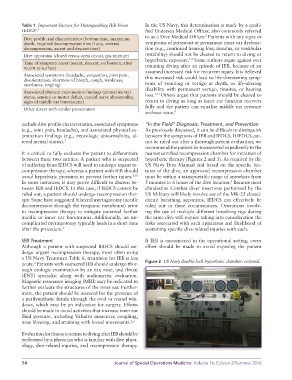
Table 1  Important Factors for Distinguishing IEB From   In the US Navy, this determination is made by a quali-
          IEDCS 1,7                                          fied Undersea Medical Officer, also commonly referred
                                                                                      3
           Dive profile and characteristics (bottom time, maximum   to as a Dive Medical Officer.  Patients with any signs or
           depth, required decompression time if any, omitted   symptoms of persistent or permanent inner ear dysfunc-
           decompression, ascent and descent time)           tion (e.g., continued hearing loss, tinnitus, or vestibular
           Dive apparatus (closed versus open circuit, gas mixture)  instability) should not be cleared to return to diving or
                                                             hyperbaric exposure.  Some authors argue against ever
                                                                               1,7
           Time of symptom onset (ascent, descent, on bottom, after
           return to surface)                                resuming diving after an episode of IEB, because of an
                                                             assumed increased risk for recurrent injury. It is believed
           Associated symptoms (headache, congestion, joint pain,   this increased risk could lead to life-threatening symp-
           disorientation, shortness of breath, cough, weakness,
           numbness, tingling)                               toms of vomiting or vertigo at depth, or life-altering
                                                             disability with permanent vertigo, tinnitus, or hearing
           Associated physical examination findings (altered mental   1,11
           status, sensory or motor deficit, cranial nerve abnormality,   loss.  Others argue that patients should be cleared to
           signs of middle ear barotrauma)                   return to diving as long as inner ear function recovers
                                                             fully and the patient can equalize middle ear pressure
           Other divers with similar presentation
                                                             without issue. 9
            include dive profile characteristics, associated symptoms   “In the Field” Diagnosis, Treatment, and Prevention
          (e.g., joint pain, headache), and associated physical ex-  As previously discussed, it can be difficult to distinguish
          amination findings (e.g., neurologic abnormalities, al-  between the symptoms of IEB and IEDCS. If IEDCS can-
          tered mental status). 7                            not be ruled out after a thorough patient evaluation, we
                                                             recommend the patient be transported expediently to the
          It is critical to fully evaluate the patient to differentiate   nearest certified recompression chamber for initiation of
          between these two entities. A patient who is suspected   hyperbaric therapy (Figures 2 and 3). As required by the
          of suffering from IEDCS will need to undergo urgent re-  US Navy Dive Manual and based on the specific fea-
          compression therapy, whereas a patient with IEB should   tures of the dive, an approved recompression chamber
          avoid hyperbaric pressures to prevent further injury. 1,10    must be within a transportable range of anywhere from
          In some instances, it may prove difficult to discern be-  5 minutes to 6 hours of the dive location.  Because most
                                                                                                3
          tween IEB and IEDCS. In this case, if IEDCS cannot be   clandestine Combat diver insertions performed by the
          ruled out, a patient should undergo recompression ther-  US Military will likely involve use of the MK-25 closed-
          apy. Some have suggested bilateral myringotomy (needle   circuit  breathing  apparatus,  IEDCS  can  effectively  be
          decompression through the tympanic membrane) prior   ruled out in these circumstances. Operations involv-
          to recompression therapy to mitigate potential further   ing the use of multiple different breathing rigs during
          middle or inner ear barotrauma. Additionally, an un-  the same dive will require taking into consideration the

          complicated myringotomy typically heals in a short time   risks associated with each apparatus and likelihood of
          after the procedure. 5                             sustaining specific dive-related injuries with each.

          IEB Treatment                                      If IEB is encountered in the operational setting, every
          Although a patient with suspected IEDCS should un-  effort should be made to avoid exposing the patient
          dergo urgent recompression therapy, most often using
          a US Navy Treatment Table 6, treatment for IEB is less
          acute.  Patients with suspected IEB should undergo thor-  Figure 2  US Navy double-lock hyperbaric chamber: external.
               3
          ough otologic examination by an ear, nose, and throat
          (ENT) specialist along with audiometric evaluation.
          Magnetic resonance imaging (MRI) may be indicated to
          further evaluate the structures of the inner ear. Further-
          more, the patient should be assessed for the presence of
          a perilymphatic fistula through the oval or round win-
          dows, which may be an indication for surgery. Efforts
          should be made to avoid activities that increase inner ear
          fluid pressure, including Valsalva maneuver, coughing,
          nose blowing, and straining with bowel movements. 1,3

          Evaluation for fitness to return to diving after IEB should be
          performed by a physician who is familiar with dive physi-
          ology, dive-related injuries, and recompression therapy.


          54                                    Journal of Special Operations Medicine  Volume 16, Edition 2/Summer 2016

